


Go Hero Go — Roguelike RPG
4.464.00 Reviews
App Specs
- Version
- 0.1.28
- Updated On
- License
- Free
- Downloads
- 100,000+
- Developer
- Puzzle Point Ltd
- Categories
- Adventure
- Platform
- Android
Screenshots
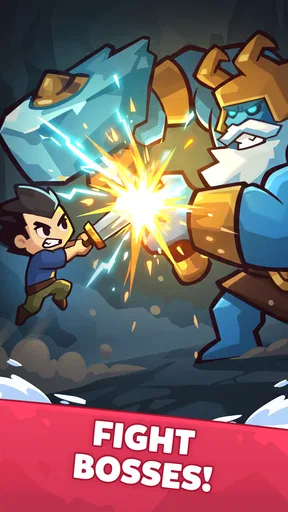
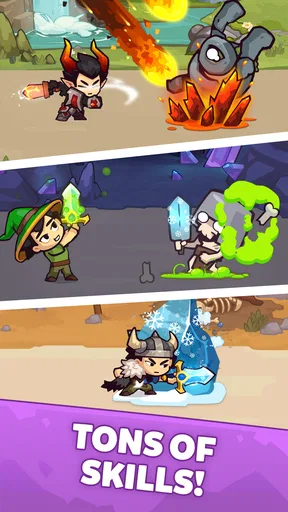
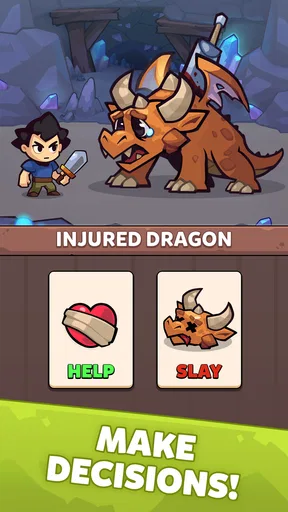
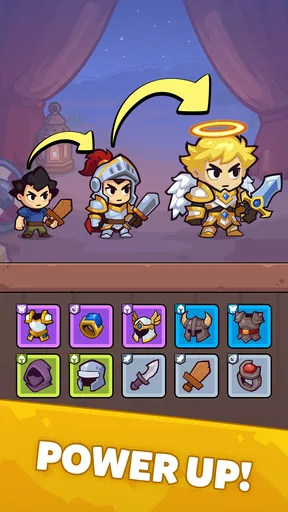
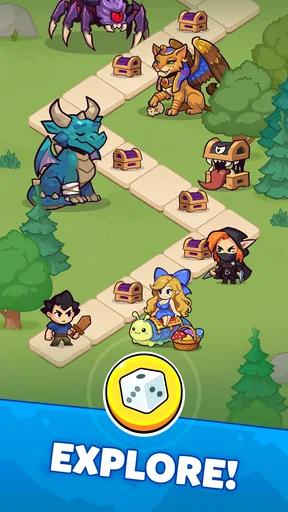
 Analysis by AppCompare
I spent time with Go Hero Go — Roguelike RPG, an adventure game from Puzzle Point Ltd that combines role-playing ideas with a board-game-like journey. Its central appeal is easy to understand: you move through a magical world, make choices, face danger, and try to build enough momentum to keep a run alive. It is free to start, aimed at Everyone, and the store summary presents it as a roguelike RPG board game rather than a traditional action adventure.
That description matters because this is not the kind of game I would recommend to someone looking for a long, cinematic campaign or fast reflex challenges. I approached it more like a compact decision-making game for short sessions. The fun comes from seeing how a route develops, reacting to setbacks, and deciding whether the next step is worth the risk. The strongest reason to try it is the free entry point combined with a format that suits brief, repeatable play.
The game has an average rating of 4.4 from around 500 ratings, with more than 60 written reviews and over 100K installs. Those figures suggest that it has already attracted a meaningful early audience, although I would still treat it as a relatively young title rather than a fully established genre leader. Puzzle Point Ltd released it on April 15, 2025, and the current version is 0.1.24, which also gives useful context when judging its level of polish and long-term development.
How the adventure feels in everyday play
The board-game structure changes the rhythm of the adventure. Instead of expecting constant movement or a stream of real-time attacks, I found myself thinking about the next decision and its possible consequences. That makes the game comfortable to play with one hand and easy to pause between moments. It is a good fit for a short break when I want something more engaging than a passive puzzle but less demanding than a full action RPG.
A realistic use case is a commute or a few minutes before bed. I can begin a run, make progress through several encounters, and stop without needing to reserve a large block of time. The roguelike format also helps those short sessions feel connected: even when a run ends badly, the attempt itself becomes part of the appeal. I am not simply repeating one fixed level; I am testing choices and learning which risks are sensible.
The magical setting supports that loop well. It gives the journey a sense of discovery, while the role-playing layer makes each decision feel more meaningful than moving pieces across an empty board. I especially like the contrast between the approachable presentation and the need to think ahead. The game may look friendly enough for a broad audience, but the best results come from resisting the temptation to treat every opportunity as automatically worthwhile.
One useful habit is to view each run as an experiment rather than a test of perfection. If I commit too strongly to one plan, an unlucky turn or difficult encounter can make the rest of the attempt feel forced. A more flexible approach works better: I consider what the current run is offering, preserve room to recover, and avoid spending every advantage immediately. That mindset is more valuable here than trying to memorize a single ideal route.
Worth Reading Before You Choose

EA SPORTS FC Mobile 26 Is a Bigger Football Game, but It Takes Time

Flipboard Shows What News Apps Must Do Beyond the Feed

Switching to Android Auto Means Rethinking Your Driving Routine

Google Calendar Makes a Crowded Week Easier to Manage

Ludo King Makes the Most of the Minutes Between Plans

Baby Panda World Brings Quick Play to Modern Phones, but Its Game Library Feels Busy
Another practical tip is to play when I can give the game at least a little attention. It is suitable for casual sessions, but it is not completely mindless. The board-game influence means that skipping decisions or tapping through without considering the situation can weaken a run. For someone who wants a game to play while distracted by another screen, a simple idle title may be a better match.
What makes the roguelike format worthwhile
The repeatable-run structure is the main source of replay value. A conventional adventure often depends on reaching the next story scene, while this game gets much of its energy from the possibility that the next attempt will unfold differently. That approach is rewarding when I enjoy gradual improvement and small discoveries. It is less satisfying if I need a clear ending, a large narrative payoff, or a carefully scripted progression.
I also appreciate how the format creates natural tension without requiring a huge map. The important question is not only whether I can overcome the current obstacle, but whether I am prepared for what could follow. That makes apparently modest choices matter. A safe option may preserve a run, while a more ambitious one may create a better position if it succeeds. The trade-off gives the adventure its personality.
Still, roguelike design can be divisive. Repeating attempts after failure is part of the intended structure, but it can feel like lost progress to players who prefer constant forward movement. If I am in the mood for a story-driven game where every play session visibly advances the same campaign, I would probably choose a conventional RPG instead. This title is better when the process of trying, adjusting, and trying again is itself enjoyable.
The board-game presentation also makes it easier to understand why the game can work for players who do not normally choose complex role-playing games. The basic idea is approachable, and the adventure framing gives decisions a clear purpose. At the same time, it is not merely a decorative board layered over a generic game. The route-based structure influences how I think about risk, timing, and the value of continuing a run.
Free access and the real value question
The game is free to download and play, which makes the initial decision straightforward: there is no upfront purchase to justify before seeing whether the format suits me. That is important for a niche blend of adventure, roguelike progression, and board-game movement. A player can try the core experience first rather than committing to a paid title based only on screenshots or a short description.
There are in-app purchases priced from $0.99 to $99.99 per item. I would therefore separate two questions: whether the free version is worth trying, and whether optional spending is worth it for a particular player. The first answer is yes for anyone curious about the format. The second depends on how strongly someone values convenience or continued support, because the listed purchase range includes both small and very large individual items.
I would not describe the game as automatically cheap simply because it is free to start. Free access lowers the risk of experimenting, but optional purchases can change the value calculation once a player becomes invested. My advice is to decide in advance whether I am only sampling the game or whether I am comfortable spending on it. That simple boundary helps keep a promising short-session game from becoming an impulse purchase.
The purchase structure is also a reason to pay attention to personal habits. If I tend to spend whenever a run becomes frustrating, I should be especially deliberate before confirming anything. If I am happy to play within the free offering and accept slower progress or occasional friction, the game can remain a low-cost way to fill spare moments. The important point is that the free download and the optional purchase path are not the same value proposition.
For families, the Everyone age rating makes the game broadly accessible from a content perspective. I would still treat spending controls as a separate practical issue, particularly on a shared device. The age label describes suitability, not a personal budget, so parents should make sure purchase approval is handled according to their household rules.
Where the experience may lose momentum
The current version, 0.1.24, signals an early stage of development. That does not make the game a poor choice, but it affects my expectations. I approach it as a title that may still be finding its balance and expanding its identity, rather than expecting the depth and refinement of a long-running RPG. Players who enjoy watching a game develop may find that appealing; players who want a mature, content-heavy package may be more cautious.
The biggest possible friction is repetition. Roguelike loops depend on the player enjoying repeated attempts, and not everyone does. If the first few runs do not make me curious about changing my approach, the game may start to feel like a sequence of similar decisions rather than a meaningful adventure. I would give it enough time to understand its rhythm, but I would not force myself to continue if the reset cycle feels more tiring than rewarding.
There is also a difference between strategic depth and the appearance of strategy. A board-game layout can make a game look thoughtful, but the real test is whether choices continue to matter after the novelty fades. My recommendation is to notice how often I am making genuine trade-offs instead of simply selecting the most obvious option. If the decisions remain consequential, the format has staying power. If not, a more system-rich RPG may offer better long-term value.
The game is not the right choice for someone seeking a large open world, elaborate real-time combat, or a fixed story that can be completed in a predictable sequence. It is also a weaker fit for players who dislike in-app purchases on principle, even though the game itself is free to access. In those cases, a premium adventure with one upfront price may provide a clearer and more comfortable purchase decision.
On the other hand, I would not compare it only with large RPGs. Its closer alternatives are lightweight roguelikes, mobile board-game adaptations, and casual adventure titles designed around repeat play. Against those options, its combination is distinctive enough to deserve a trial. A pure puzzle game may offer cleaner, faster sessions, while a traditional roguelike may provide more mechanical intensity. This title sits between those experiences, favoring accessible decisions and a magical journey.
Who will get the most from it
I think the best audience is a player who likes making choices under changing conditions but does not always have time for a long gaming session. The game suits someone who can enjoy a run even when it ends imperfectly, because the learning process is part of the entertainment. It is also a sensible recommendation for a curious RPG player who wants a less demanding alternative to a large campaign.
It may work well for families and younger players because of its Everyone rating and approachable adventure framing. I would introduce it as a game about exploring and choosing carefully, not as a complex role-playing system that requires extensive preparation. That description sets the right expectations and avoids promising the kind of depth found in a major console or PC RPG.
Players who enjoy optimizing routes can find extra value by treating each attempt as a small planning exercise. Rather than rushing toward every reward, I would compare immediate gains with the condition of the run and the risks ahead. This is one of the less obvious strengths of the format: the game encourages me to think about the shape of an entire attempt, not just the next tap.
It is also useful for people who want a game that can be stopped naturally. Because the experience is organized around runs and decisions, it does not demand the same uninterrupted commitment as a story mission with a long cutscene or a multiplayer match. That makes it easier to fit into a busy routine. I would still avoid beginning a run when I know I cannot pay attention at all, since careless choices reduce the enjoyment.
I would tell competitive players to keep their expectations moderate unless they specifically enjoy personal improvement and repeated experimentation. The appeal here is not necessarily beating another person or chasing a social ranking; it is understanding the game’s rhythm and making better decisions over time. Someone who needs constant external competition may find a multiplayer adventure more motivating.
My recommendation after playing
My verdict is to try it if the idea of a magical roguelike journey presented through board-game-style decisions sounds appealing. The free price makes that recommendation easy, and the game offers a clear use case for short sessions without pretending to be a full-scale adventure epic. I would begin without spending, learn whether the repeatable loop holds my attention, and only then consider any optional purchase.
I would skip it if I want a one-time premium experience, a large scripted campaign, or action that depends on quick reflexes. I would also skip it if repeated runs feel like wasted progress rather than a chance to improve. Those are not minor preferences here; they determine whether the central design feels engaging or frustrating.
For me, the most convincing part is the balance between accessibility and decision-making. It is simple enough to pick up during a spare moment, but it rewards more thought than a disposable time-filler. The main caution is that its early version and optional purchase range mean I should judge the free experience on its own terms rather than assuming future depth or spending more than intended.
In short, Puzzle Point Ltd has made a promising adventure for players who enjoy compact runs, magical presentation, and choices that carry risk. I would recommend downloading Go Hero Go — Roguelike RPG as a low-commitment experiment, especially for mobile players who like board-game ideas but want a fantasy setting. It earns that recommendation through its free access and focused format, while its repetition and purchase options are good reasons to proceed thoughtfully.
Pros
- Quick runs make it easy to play during short breaks.
- Randomized levels keep each attempt feeling different.
- Simple controls are accessible on touchscreen devices.
- Hero upgrades create a satisfying sense of progression.
- Bright visuals make enemies and rewards easy to recognize.
Cons
- Some upgrades may feel dependent on luck rather than strategy.
- Repeated runs can become predictable after extended play.
- Small-screen combat may feel crowded during intense encounters.
- Progress may slow noticeably without frequent play sessions.
- The game can consume battery quickly during longer runs.
FAQs for Go Hero Go — Roguelike RPG
What is Go Hero Go — Roguelike RPG?
Go Hero Go — Roguelike RPG is a mobile role-playing game built around short, replayable dungeon runs. You guide a hero through randomly generated encounters, defeat enemies, collect equipment, and improve your abilities between attempts. Because each run can unfold differently, the game focuses on experimentation, strategic decisions, and gradually building a stronger character rather than following one fixed path.
How does the roguelike gameplay work in Go Hero Go?
The game uses a run-based structure, meaning a defeat can send your hero back to the beginning while encouraging you to try a new strategy. During each attempt, you choose routes, fight enemies, gather rewards, and select upgrades. Random elements make every run feel different, but your decisions about skills, equipment, and combat timing still have a major effect on how far you progress.
Is Go Hero Go suitable for casual players or does it require advanced RPG experience?
Go Hero Go is approachable for players who are new to roguelike RPGs, since its basic controls and progression concepts are easy to understand. However, later challenges may require more careful planning, especially when choosing upgrades or facing stronger opponents. Casual players can enjoy short sessions, while experienced RPG fans will likely appreciate experimenting with character builds and optimizing each run.
Does Go Hero Go require an internet connection or include in-app purchases?
Before downloading, players should check the current store listing for the latest information about connection requirements, advertisements, and in-app purchases, as these details may change with updates or differ between Android and iOS. If optional purchases are available, they may provide extra resources or convenience. Review the payment settings carefully if children or other users share your device.
What should I know about the game’s performance and device compatibility?
Performance can vary depending on your phone or tablet, operating system version, available storage, and how recently the game has been updated. On compatible devices, the game is designed for quick mobile sessions, but older hardware may experience slower loading, reduced visual quality, or occasional stability issues. Check the official Google Play or App Store requirements before installing to avoid compatibility problems.


